
Physician Resources
An increase in kidney biopsy miss rate can significantly affect patient care in the management of medical kidney disease.
Renal Biopsy Adequacy: How Arkana Defines and Measures Quality
Adequacy metrics help institutions and practitioners assess their renal biopsy procedure performance. Arkana tracks this data and has established cutoffs to define biopsies that are adequate to facilitate standardization and benchmarking across institutions, and to aid those who wish to undertake quality improvement efforts. Defining “cutoffs” for adequacy involves professional judgment, as there is no single standard.
That said, renal pathology groups and nephrologists converge on roughly similar thresholds that serve as useful guidelines, and the logic behind these cutoffs is described in this document. The cutoffs used in Arkana’s analysis were chosen based upon those that have previously been proposed and are intended to balance simplicity with performance by having a single renal biopsy cutoff, regardless of disease state or transplant status.
Glomerular Count Cutoffs in Arkana Adequacy Reports
Light Microscopy (LM)
- Adequate: ≥10 total glomeruli
- Suboptimal: <10 glomeruli
Immunofluorescence (IF)
- Adequate: ≥5 total glomeruli
- Suboptimal: <5 glomeruli
We also routinely track the depth of renal biopsies in an effort to facilitate further interpretation of the adequacy data and aid in diagnosing possible problems when institutions determine their adequacy needs improvement. Since there are many possible reasons an institution or practitioner’s mean glomerular count might be lower than desired, the depth of the renal biopsies is provided to help narrow down the possibilities.
For example, a high percentage of deep biopsies indicates that adequacy issues are likely arising from excessive needle depth during the procedure. Alternatively, a low mean glomerular count in the setting of a relatively low percent of deep biopsies indicates that there is not enough renal parenchyma being sampled, either due to a small needle gauge or small sample size.
Cortex Cutoffs in Arkana Adequacy Reports
- Adequate: ≥60% cortex
- Deep biopsy: <60% cortex (i.e. >40% medulla)
Why Does a Biopsy Need to Be “Adequate” if a Diagnosis Can Be Made?
While a single glomerulus might be enough to suggest a diagnosis in some cases, a larger sample provides a more representative picture of what is happening in the kidney. Small samples risk missing focal disease, which can affect treatment decisions. For instance, in diseases with 10% glomerular involvement (e.g., FSGS or crescentic glomerulonephritis), a biopsy with only 10 glomeruli has a 35% chance of missing abnormalities. To exclude focal disease with fewer than 10% glomerular involvement with >90% confidence, at least 20 glomeruli are needed. For this reason, 20 has long been held as the “ideal” number of glomeruli for light microscopy evaluation of a renal biopsy.
How Biopsy Adequacy Influences Patient Care
Adequacy and diagnosis are not the same. Just because a diagnosis can be made does not mean the biopsy was ideal. A suboptimal biopsy means that diagnostic confidence is lower, even if a conclusion was reached. Even when a diagnosis is made, a suboptimal biopsy has real clinical consequences for patients, including:
- Increased need for repeat biopsy leading increased risk, cost, and discomfort to the patient
- Missed or incomplete diagnosis that could lead to possible delays or incorrect treatment
- Increased risk for patients since deeper biopsies have a higher risk for bleeding compared to optimal biopsies that are primarily cortical
So, while a biopsy with fewer than 10 glomeruli may sometimes be “good enough,” our goal is not just to make a diagnosis, but to make it as confidently and accurately as possible with the minimum amount of risk to the patient.

Renal Biopsy Technique for Radiologists Using CT Imaging
Dr. Shree Sharma and Dr. Tiff Caza recently sat down with Dr. Salil Parikh, a radiologist with the Methodist LeBonheur Healthcare Group in Tennessee to discuss how his facility vastly improved their renal biopsy adequacy. You can listen to the full conversation here, and find more information about Dr. Parikh’s kidney biopsy technique for radiologists below. He utilizes CT imaging to achieve better biopsy adequacy rates.
Top Level Insights
- At least 10 glomeruli is an adequate biopsy. 20 or more is ideal.
- Use a tangential approach. For at least an adequate specimen, place either two 2.3-2.5 cm in formalin, which is used for light microscopy and electron microscopy. For Michel’s solution, one 2.3-2.5 cm will do.
- There is a positive correlation between an inadequate biopsy and a significant complication. Most of the inadequate biopsies are due to not being tangential enough. There is more medulla in the sample which is where bigger arteries are present.


Biopsy Adequacy Videos
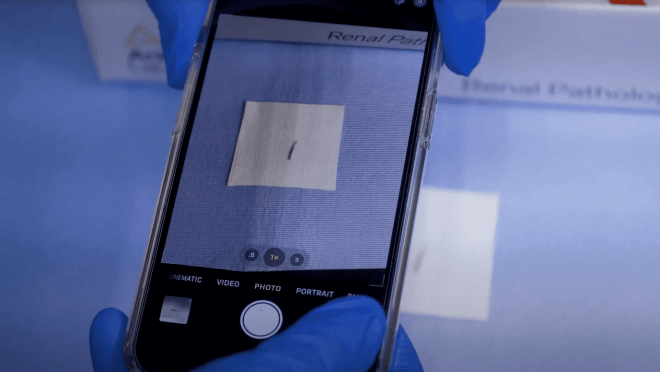
Quick Guide

Quick Guide
Publications on Biopsy Adequacy
Increasing Incidence Of Inadequate Kidney Biopsy Samples Over Time: A 16-Year… Increasing Incidence Of Inadequate Kidney Biopsy…
Recently, there has been a perceived change in the number of inadequate samples. The aim of this study was to determine…
Recently, there has been a perceived change in the number of inadequate samples. The aim of this study was to determine the native renal biopsy miss rate from 2005 to 2020 at Arkana Laboratories, a nationwide kidney biopsy service.

An Integrated Pathology And Ultrasonography-Based Simulation For Training In… An Integrated Pathology And Ultrasonography-Based…
A novel KBSW is an effective educational tool to acquire proficiency in PKB performance and could help regain interest…
A novel KBSW is an effective educational tool to acquire proficiency in PKB performance and could help regain interest among trainees in performing PKBs.
Use Of A Smartphone Camera At The Bedside To Assess Adequacy Of Kidney Biopsies Use Of A Smartphone Camera At The Bedside To…
Kidney biopsies are the gold standard for diagnosis in evaluating native and transplanted kidney disorders. Obtaining…
Kidney biopsies are the gold standard for diagnosis in evaluating native and transplanted kidney disorders. Obtaining adequate tissue samples is vital.
The Renal Biopsy The Renal Biopsy
The first renal biopsy was carried out more than a century ago, but its widespread introduction into clinical use,…
The first renal biopsy was carried out more than a century ago, but its widespread introduction into clinical use, beginning in the 1950s, helped develop nephrology into the powerful subspecialty of internal medicine that it is today.
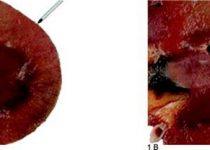
Smartphone-Based Machine Learning Model for Real-Time Assessment of Medical… Smartphone-Based Machine Learning Model for…
We developed a machine learning model to perform binary classification of smartphone images of kidney biopsy tissue,…
We developed a machine learning model to perform binary classification of smartphone images of kidney biopsy tissue, based on the amount of cortex. The model was developed on smartphone images of 747 kidney biopsy cores from deceased donor kidneys,…

If you’re an Arkana client, contact us to request your adequacy rate report.
Contact UsBiopsy Adequacy Podcasts
On our podcast “Glom Goals,” our renal pathologists, Dr. Shree Sharma and Dr. Tiffany Caza, sit down with radiologists, nephrologists, and other specialists to talk through the growing challenge of biopsy inadequacy. We share what we’re seeing in the data, hear firsthand how friends from the field approach technique and quality tracking, and discuss practical steps clinicians can take to improve adequacy and support better patient care.