

Clinical History:
The patient is a 54-year-old woman with longstanding (R>L) upper and lower extremity weakness with periodic falls and difficulty climbing stairs. Family history is remarkable only for maternal lung cancer. Neuromuscular exam: alert and oriented x3; strength: 5/5 except 4+/5 right-sided shoulder abduction, handed finger extension, thigh flexion, and extension of the legs and feet.
Variants in which gene(s) is(are) associated with the major histologic findings?
A. GAA
B. GNE1
C. GYG1
D. G6PD
Answer:
C. GYG1
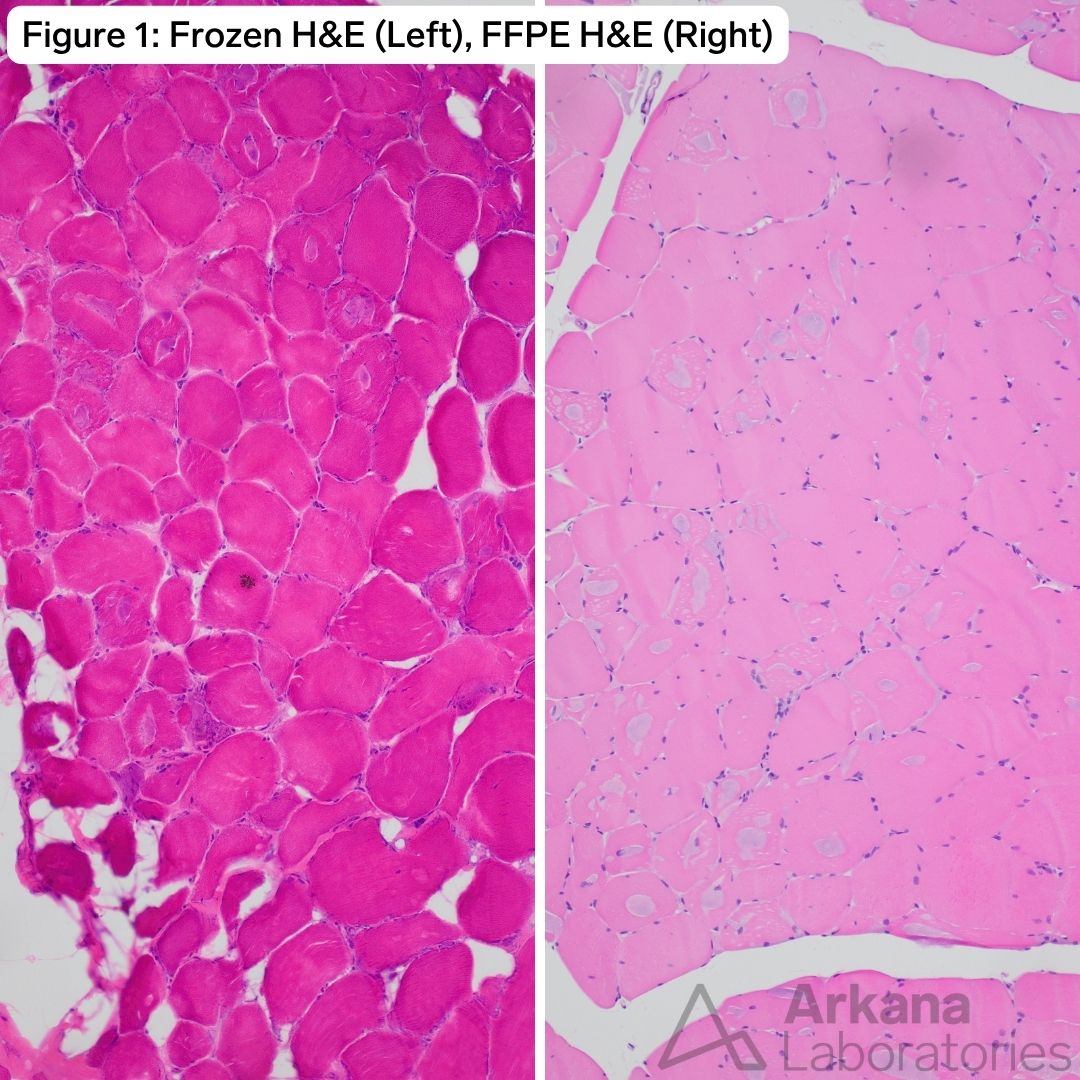
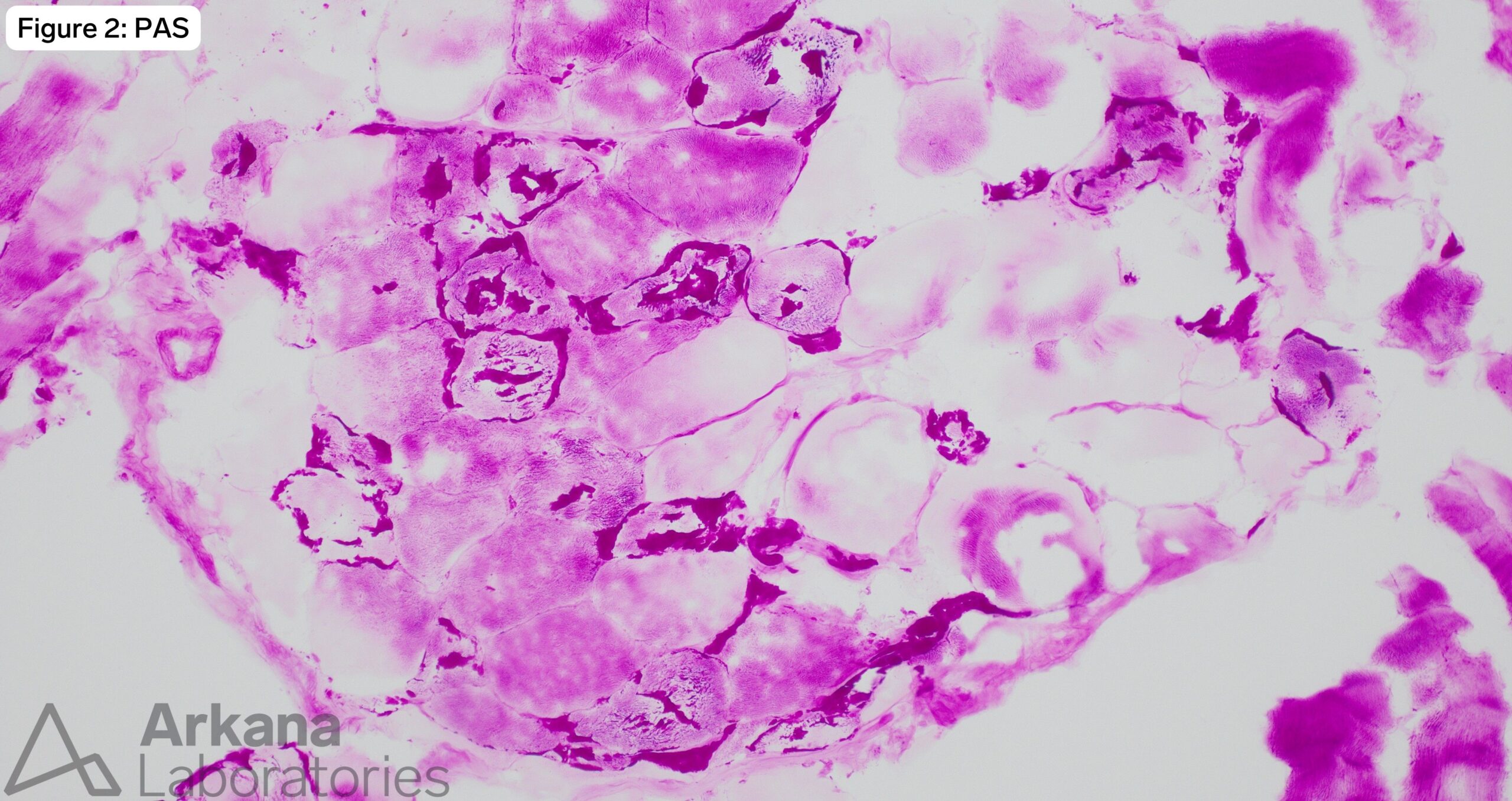
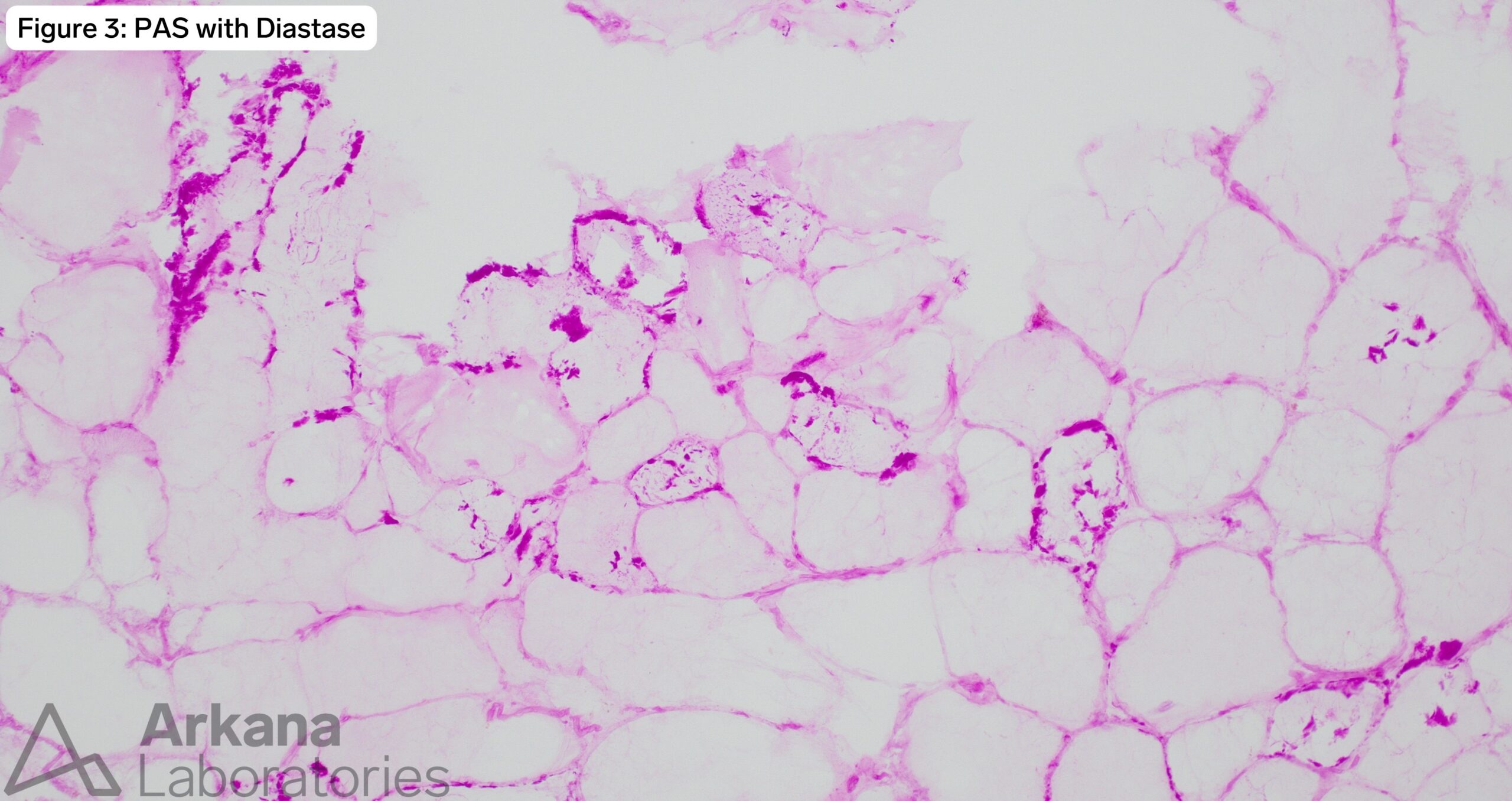
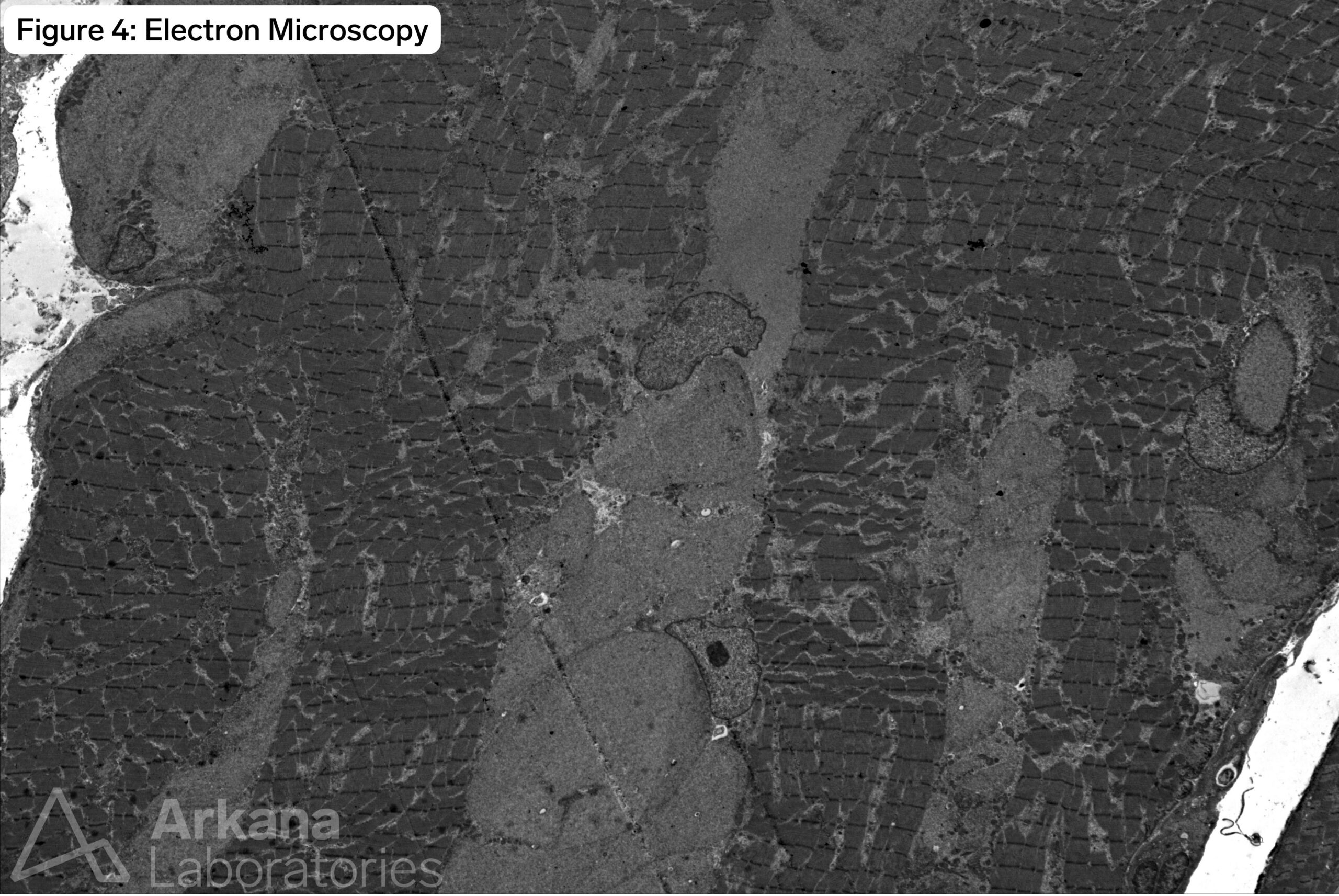
- The slides demonstrate sarcoplasmic inclusions that are PAS positive and resistant to diastase. Remaining enzymatic stains do not highlight the material. On electron microscopy the material is fibrillary and not membrane bound. Together these findings confirm the material is polyglucosan. Polyglucosan body diseases that present in adults are caused by mutations in genes that disrupt normal glycogen metabolism such as GBE1 (adult polyglucosan body disease), GYG1 (polyglucosan body myopathy type 2; PGBM2), RBCK1 (PGBM1), PFKM (glycogen storage disease type VII/Tarui disease), PRDM8 (progressive myoclonic epilepsy type 10), PRKAG2 (PRKAG2 syndrome), or EPM2A/2B (Lafora disease).
- The patient in this case was found to pathogenic intronic variants in GYG1 and was diagnosed with PGBM2.
- PGBM2 primarily effects skeletal muscle and is caused by mutations in GYG1 which encodes glycogenin-1 which acts as a primer to form a core sugar chain used by enzymes to form normal glycogen. Without glycogenin-1 the cellular machinery generates abnormally long, unbranched, poorly soluble filamentous glucose polymers which create the polyglucosan bodies seen. The primary symptom is slowly progressive muscle weakness. Unlike PGBM1, PGBM2 rarely presents with cardiac involvement.
Quick note: This post is to be used for informational purposes only and does not constitute medical or health advice. Each person should consult their own doctor with respect to matters referenced. Arkana Laboratories assumes no liability for actions taken in reliance upon the information contained herein.


