


Clinical History:
The patient is a young child a year prior to the current biopsy to have compound heterozygous GAA variants. Hex4 levels were initially elevated but since initiating enzyme replacement therapy, the levels have dropped within normal limits.
What enzyme is deficient in this patient’s disease?
A. Acid alpha-glucosidase
B. Glycogen phosphorylase
C. Glucose-6-phosphate translocase
D. Myophosphorylase
Answer:
A. Acid alpha-glucosidase
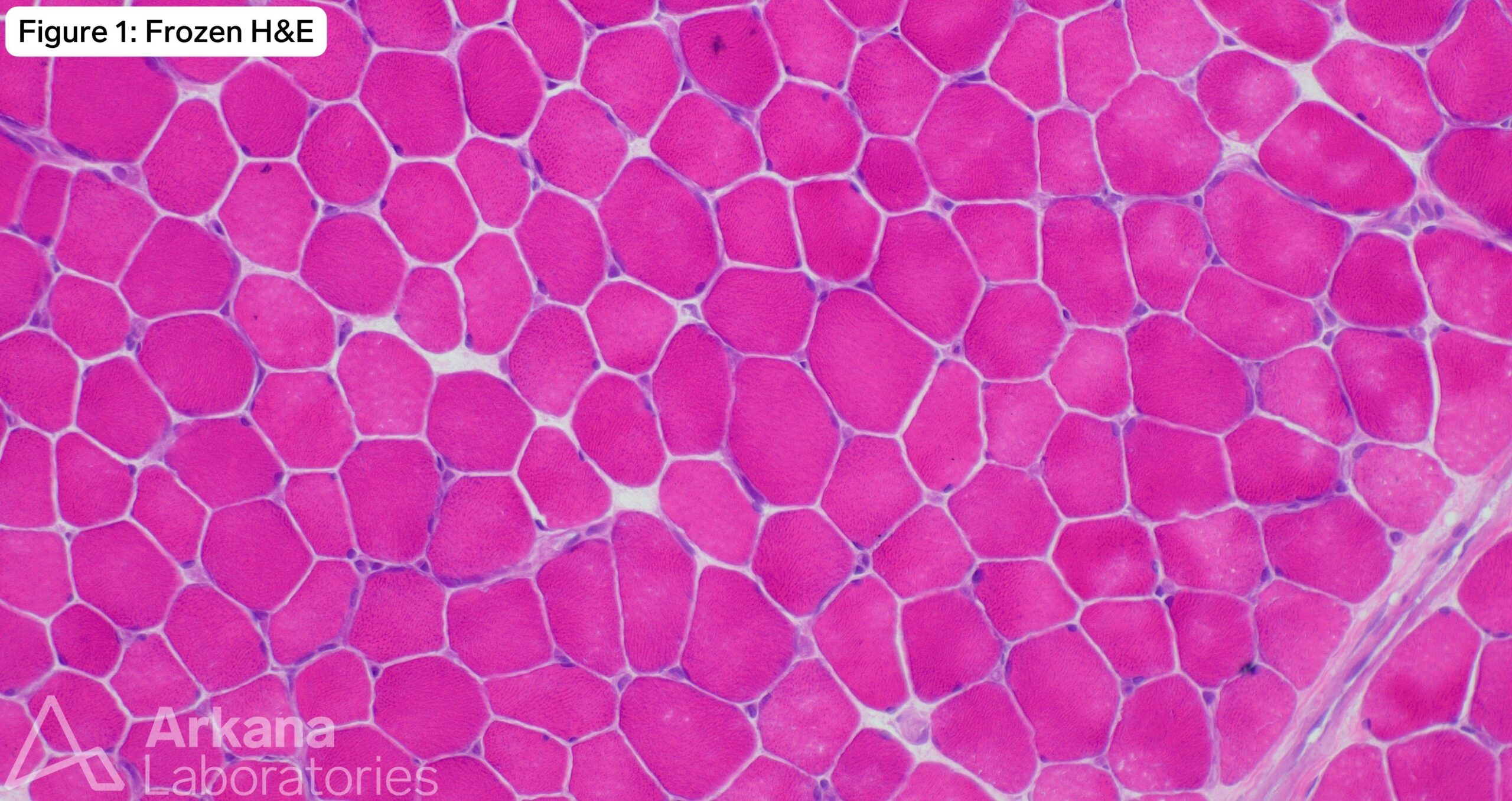
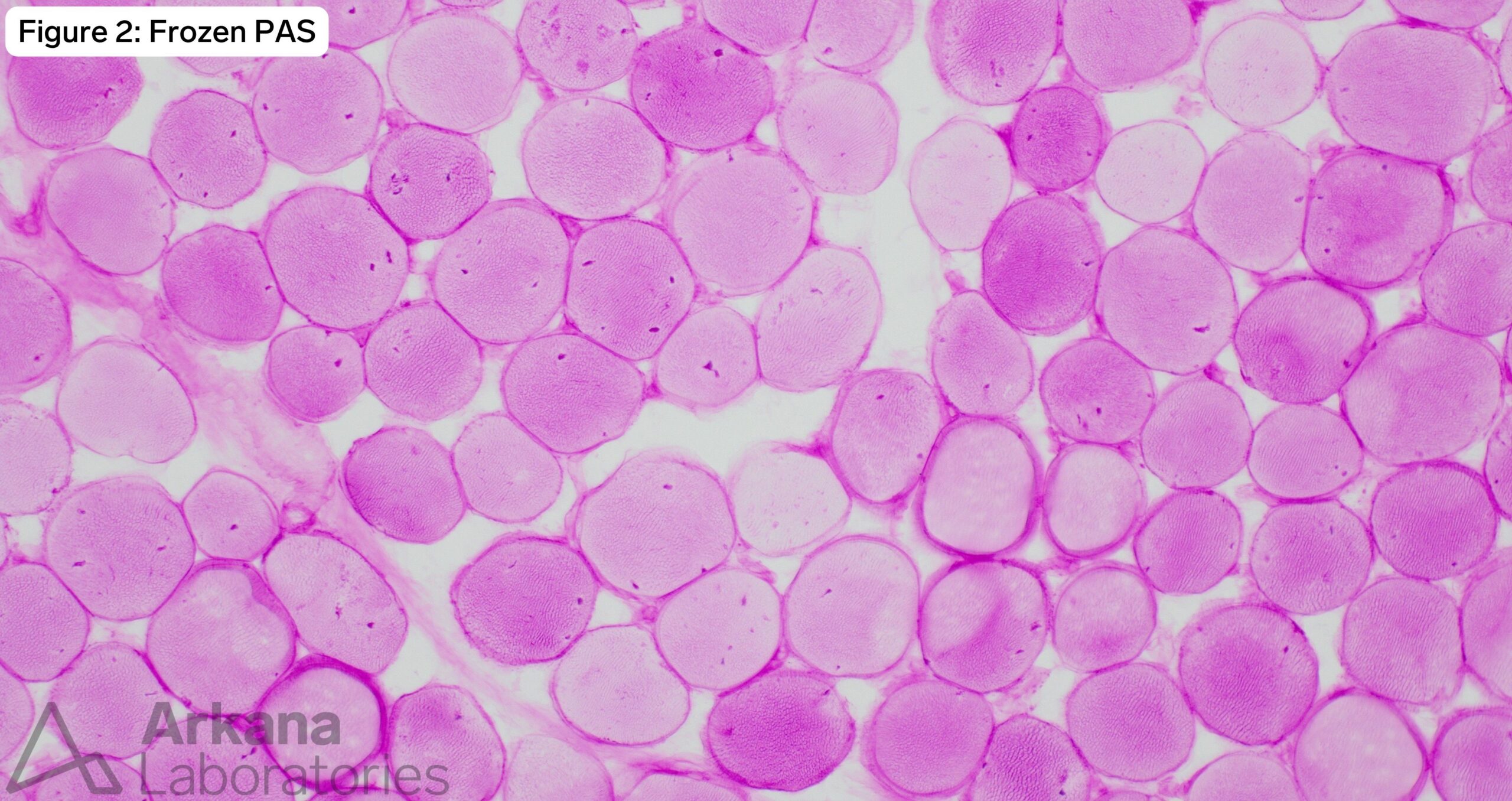
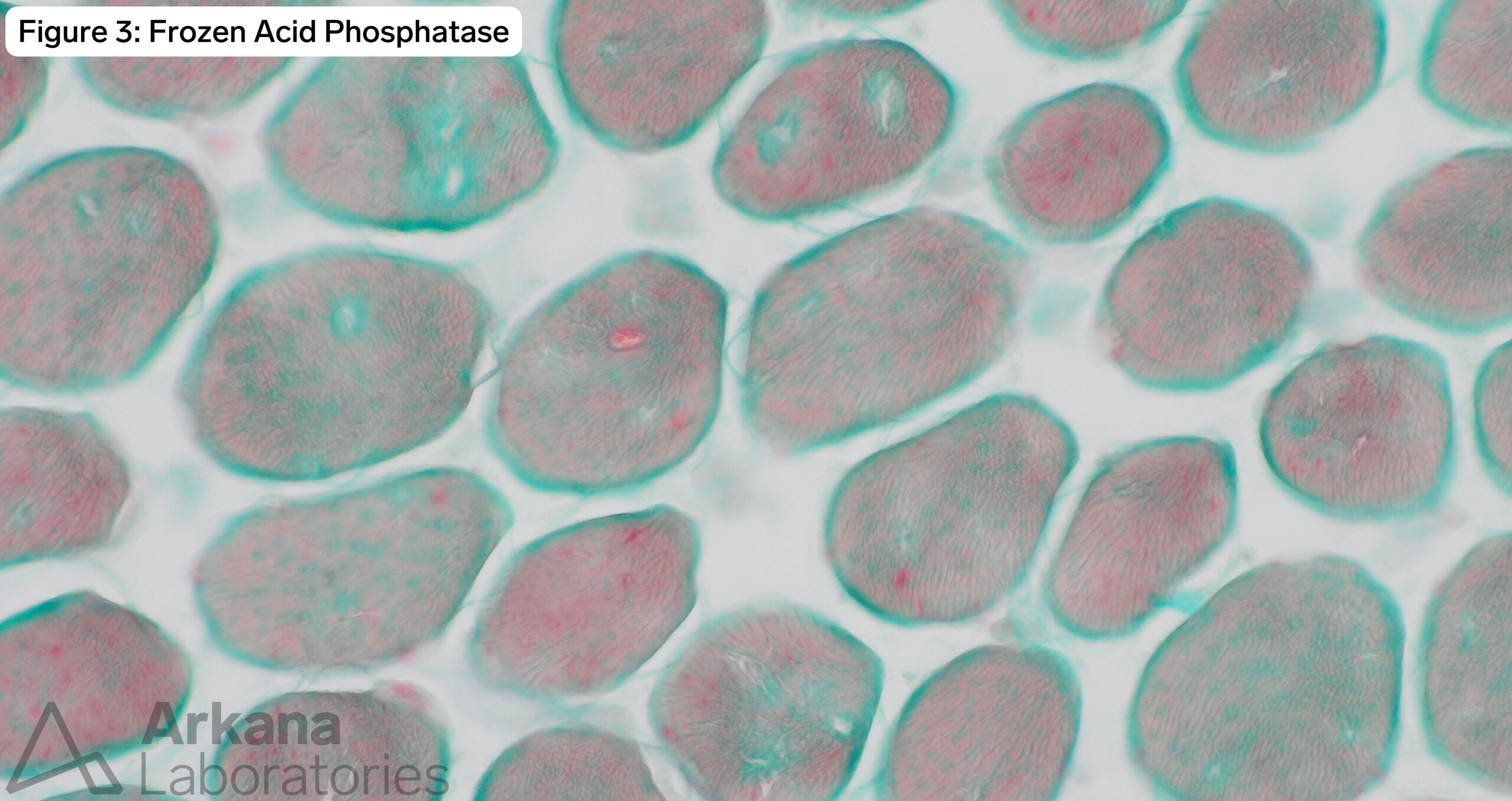
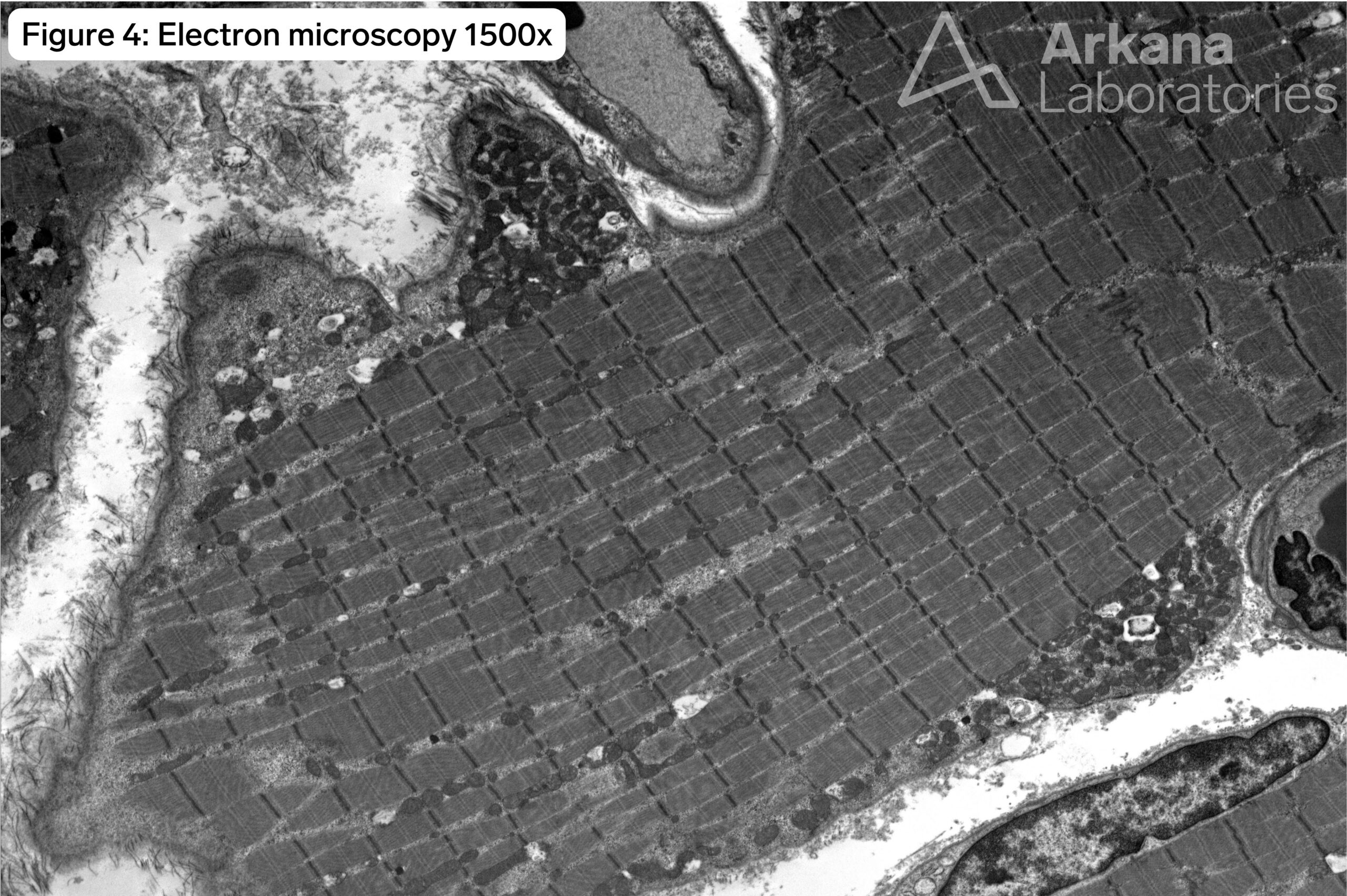
- The patient has compound heterozygous mutations in the GAA gene which codes for the acid alpha-glucosidase enzyme. The patient has Pompe disease, aka glycogen storage disease (GSD) type II and is on enzyme replacement therapy and is demonstrating improvement on Hex4 urine testing. The biopsy demonstrates findings of punctate lysosomes on acid phosphatase staining with small PAS positive vacuoles. Ultrastructural evaluation reveals rare, small, membrane bound collections of glycogen. Together the findings are supportive of a treatment response.
- Glycogen phosphorylase deficiency can be caused by the PYGL gene for liver or PYGM gene for skeletal muscle. PYGM codes for myophosphorylase and when deficient is the cause for type V GSD, McArdle disease
- Glucose-6-phosphate translocase – encoded by the SLC37A4 gene and causes GSD Type Ib when deficient.
Quick note: This post is to be used for informational purposes only and does not constitute medical or health advice. Each person should consult their own doctor with respect to matters referenced. Arkana Laboratories assumes no liability for actions taken in reliance upon the information contained herein.


