


Clinical History:
This 40-year-old patient presented with progressive skin thickening of several months duration involving their arms and legs. Laboratory studies showed elevated ESR and CRP, transient hypereosinophilia, positive ANA, negative/normal CPK, aldolase, scleroderma serologies and myositis specific autoantibody panel. MRI demonstrated abnormal signal intensity within fascia but not within skeletal muscle. No evidence of interstitial lung disease was noted.
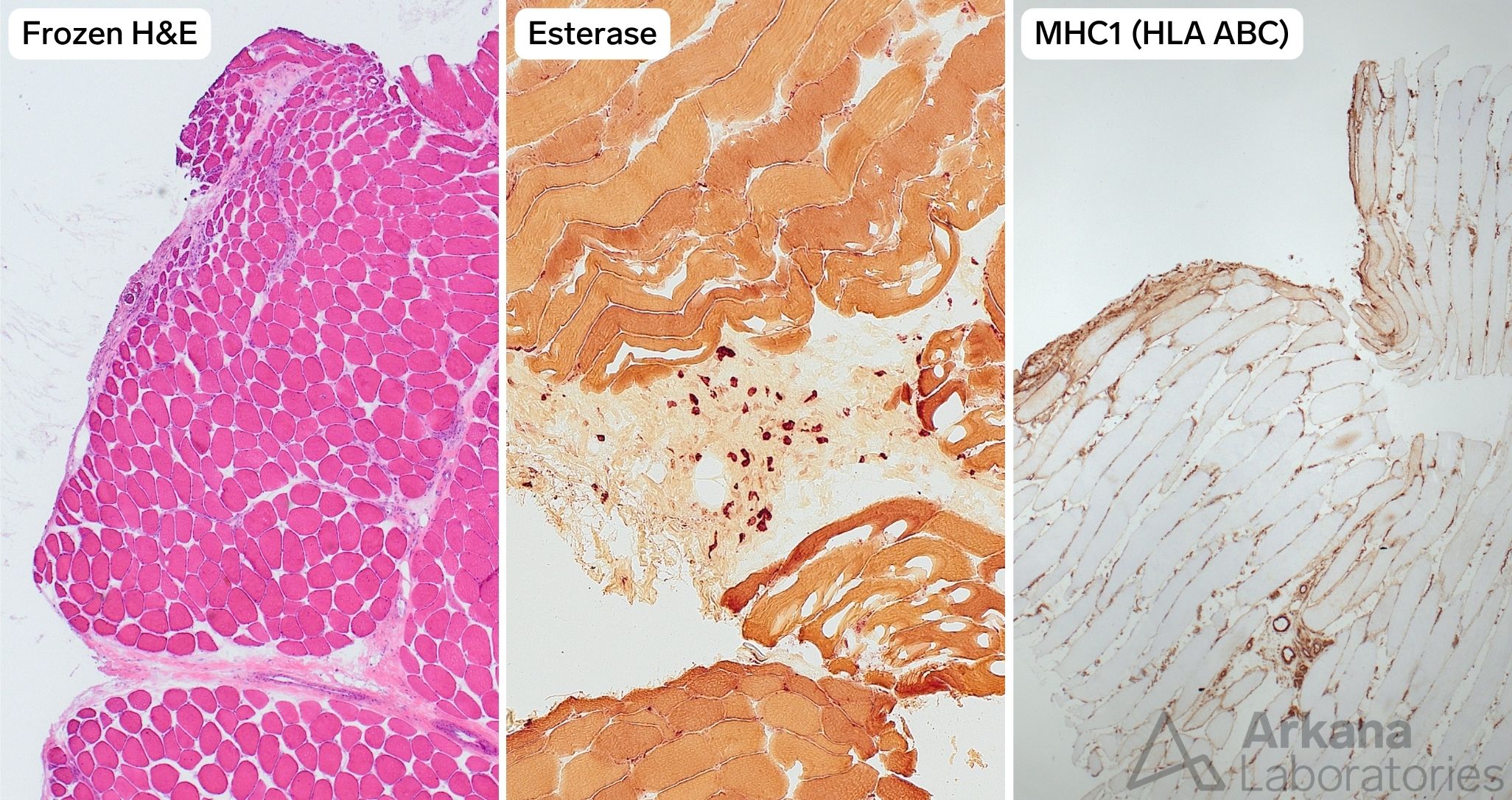
On muscle biopsy no regenerating or necrotic muscle fibers were seen. No chronic lymphoid inflammation was seen in the skeletal muscle tissue. MxA immunostain was negative.
What is your diagnosis?
A. Fasciitis
B. Dermatomyositis
C. Anti-synthetase syndrome
D. Polymyositis
Answer:
Fasciitis
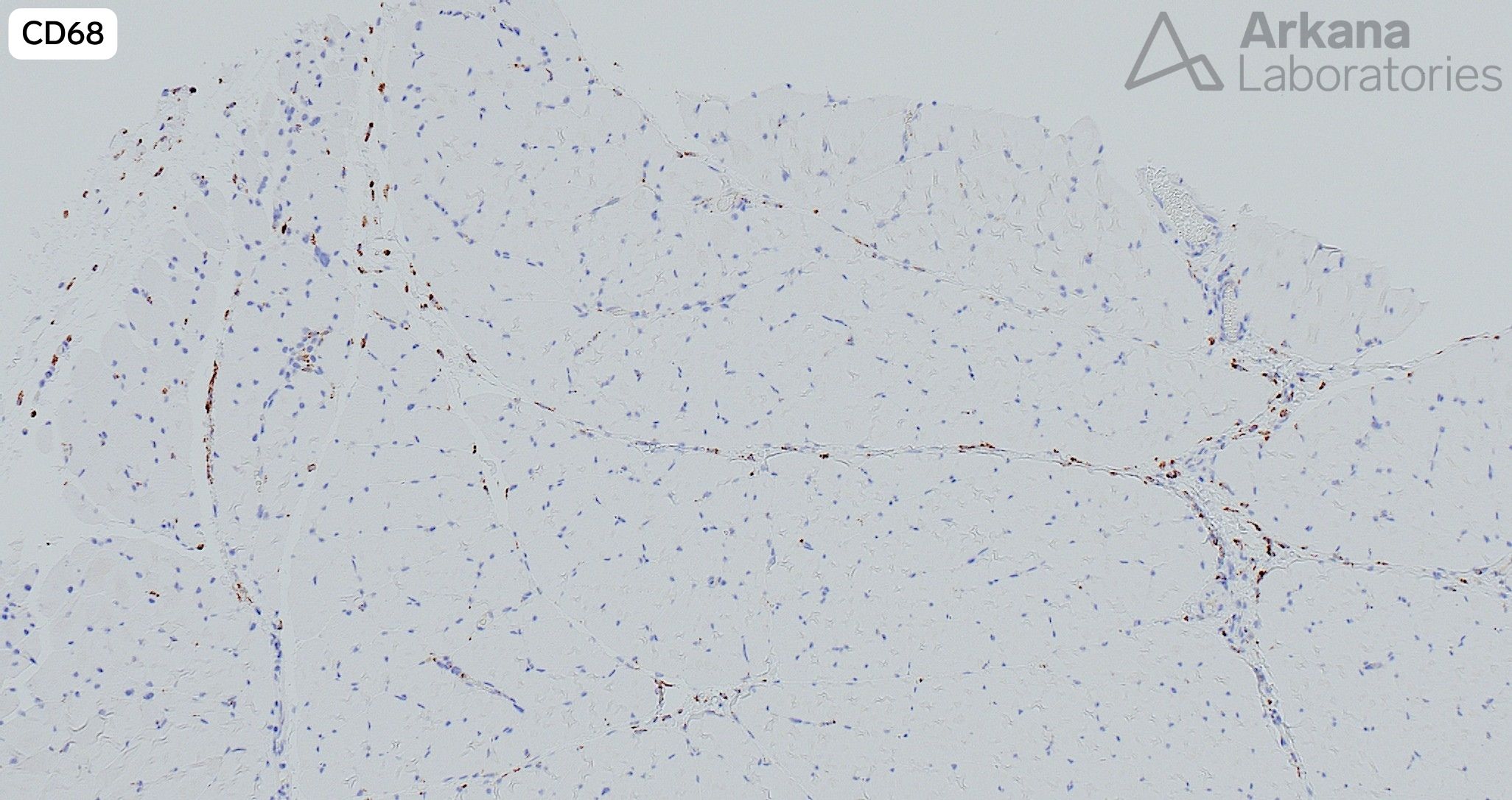
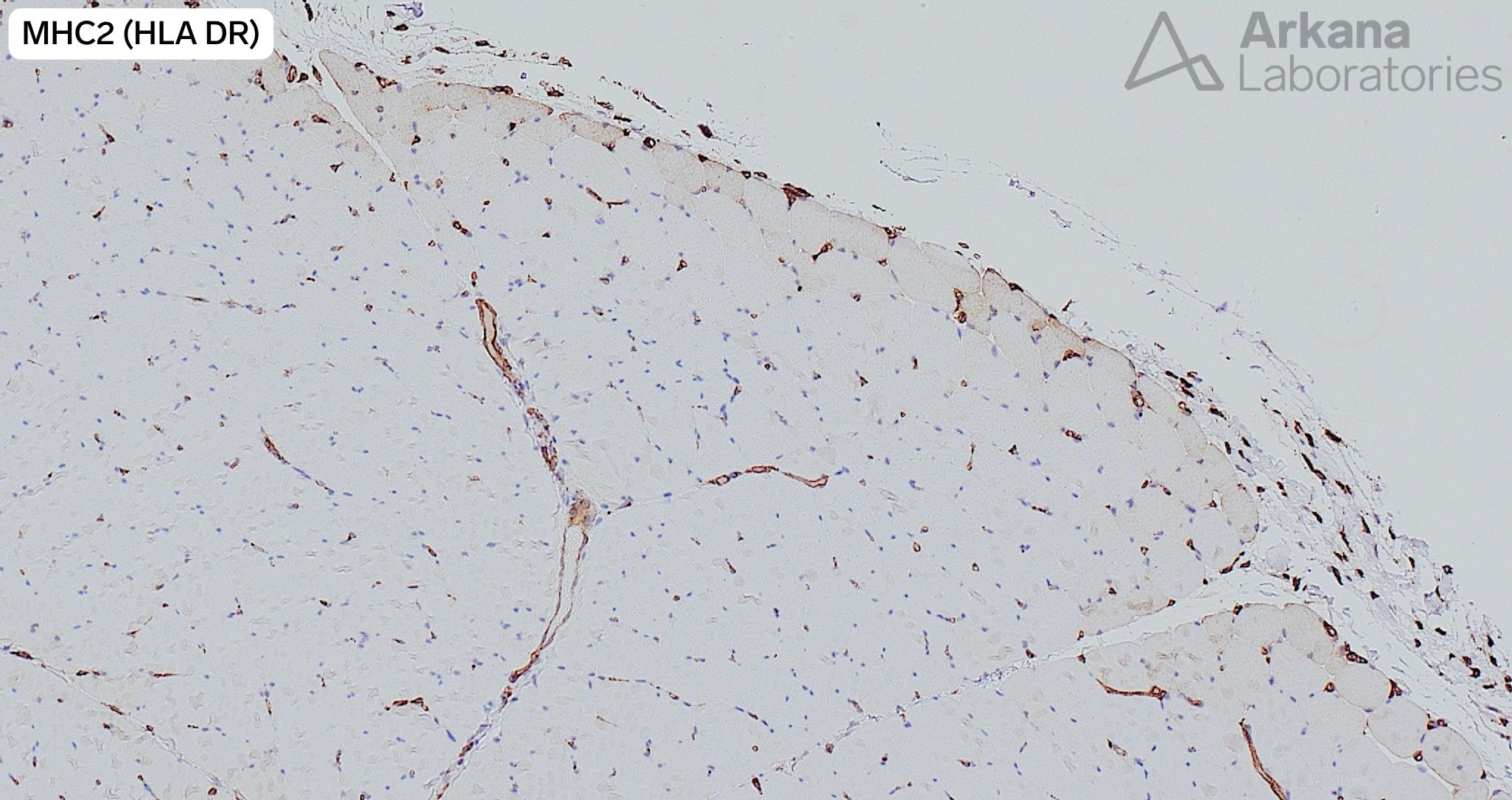
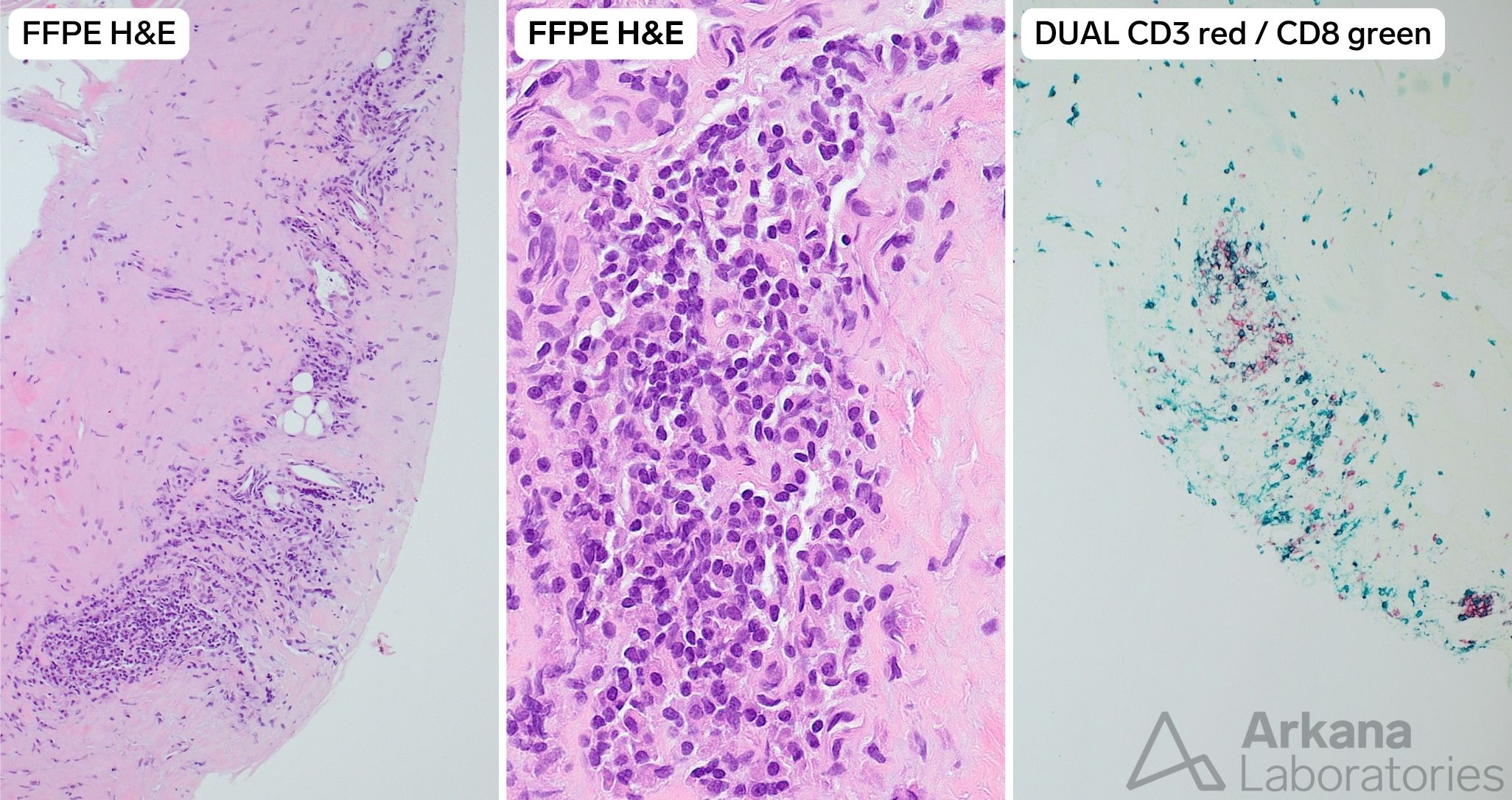
The pathologic abnormalities are consistent with the presence of fasciitis. While no eosinophils were seen in the chronic inflammatory infiltrates, the reported transient hypereosinophilia would most strongly support a diagnosis of “fasciitis with or without eosinophilia” (aka eosinophilic fasciitis; Shulman’s disease).
Perifascicular atrophy, which is felt to be at least in part related to vascular injury, may be seen in fasciitis as well as dermatomyositis and anti-synthetase syndrome. HLA DR staining of myofibers in a perifascicular distribution is typical of anti-synthetase syndrome but has also been reported in fasciitis with or without eosinophilia.
Reference(s) / Additional Reading:
- Jinnin M, Yamamoto T, Asano Y, et al. Diagnostic criteria, severity classification and guidelines of eosinophilic fasciitis. J Dermatol. 2018;45(8):881-890. doi:10.1111/1346-8138.14160
- Pehl D, Preuße C, Allenbach Y, et al. Eosinophilic fasciitis (Shulman syndrome)-recognition of the histological spectrum allows for new insights into possible pathomechanisms. Rheumatology (Oxford). 2023;62(5):2005-2014. doi:10.1093/rheumatology/keac526
- Shulman LE. Diffuse fasciitis with eosinophilia: a new syndrome? Trans Assoc Am Physicians 1975; 88:70–86.
Quick note: This post is to be used for informational purposes only and does not constitute medical or health advice. Each person should consult their own doctor with respect to matters referenced. Arkana Laboratories assumes no liability for actions taken in reliance upon the information contained herein.


