


Clinical History:
This 60-year-old patient presented with bilateral proximal lower extremity muscle weakness of four years duration with some foot numbness. The patient’s past medical history is significant for type 2 diabetes and low back pain. Laboratory studies showed mildly elevated CPK and aldolase. Electrodiagnostic studies (EMG/NCS) showed features of a distal symmetrical sensorimotor polyneuropathy with mixed axonal and demyelinating features and proximal myopathic changes. The patient’s home medication list included atorvastatin. The patient had a wide-based gait. They were not treated with steroid prior to muscle biopsy.
How would you generally characterize the pathologic changes shown in the provided images?
A. Denervation
B. Denervation and myopathic
C. Myopathic
D. Normal

Answer:
Mixed denervation and myopathic changes
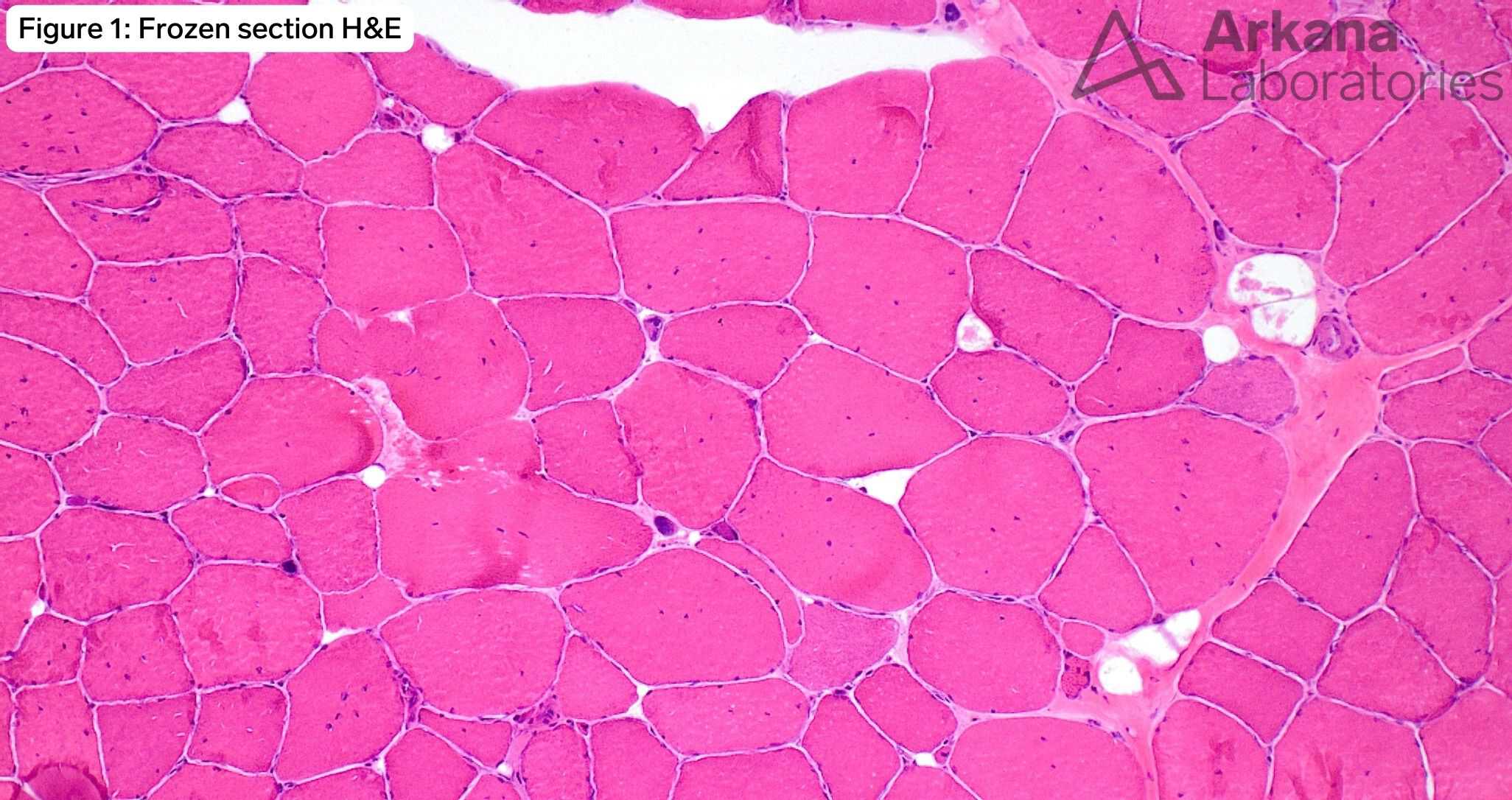
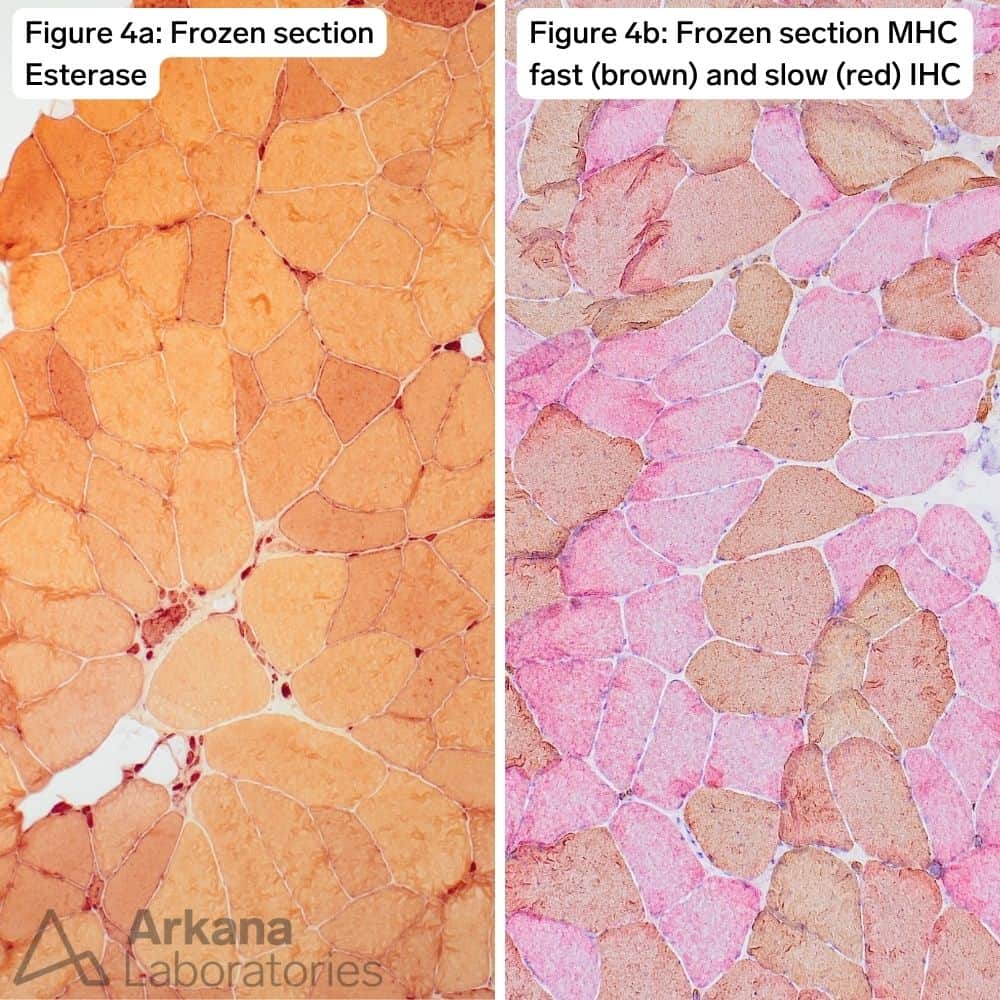
- The denervation (neurogenic) type changes consist of scattered esterase positive atrophic muscle fibers indicating the presence of ongoing denervation, and only a mild tendency toward fiber type grouping (fiber type groups are not well-developed) indicating prior denervation with early reinnervation.
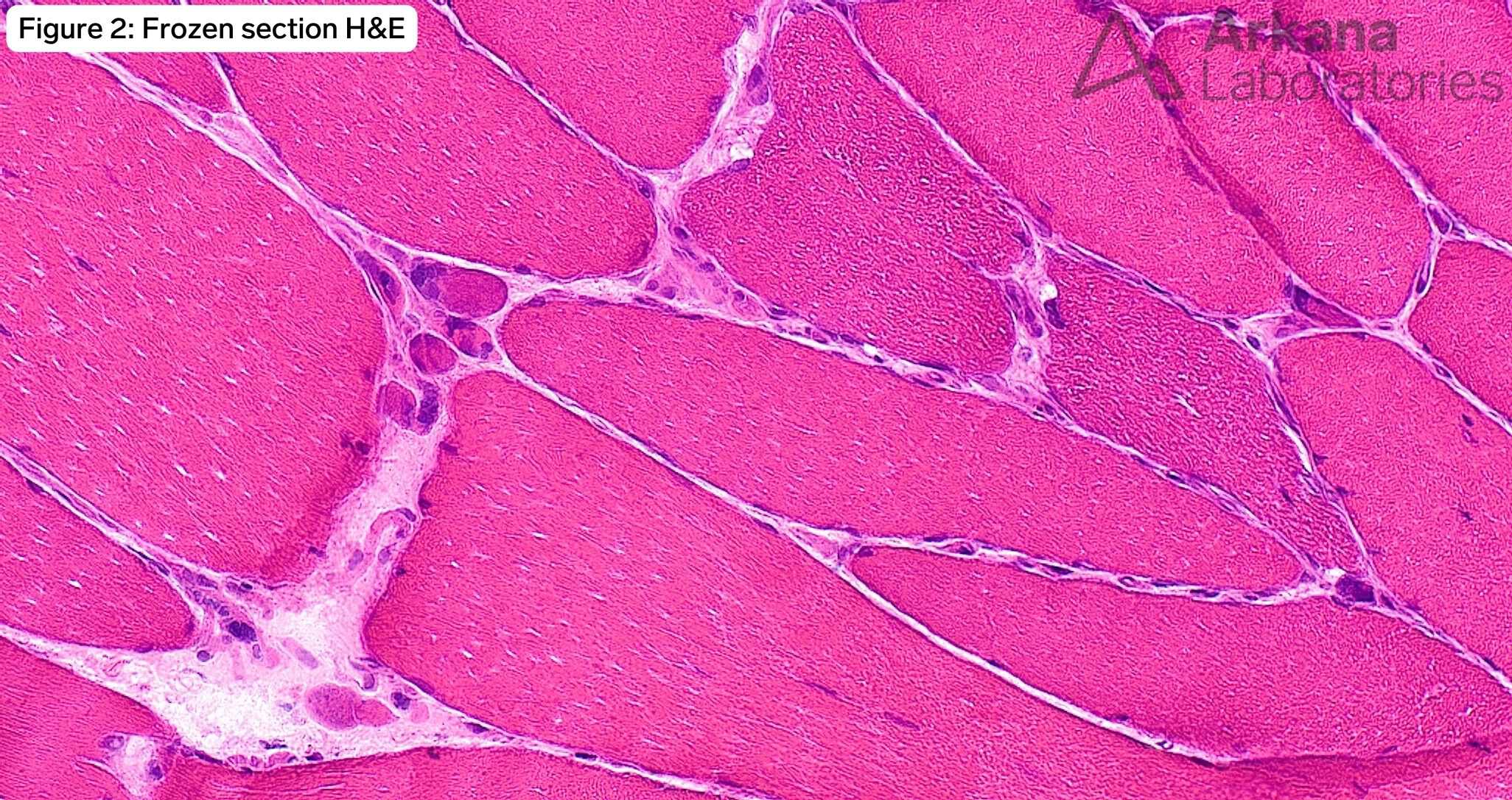
- A few variably atrophic regenerating muscle fibers without associated chronic lymphoid inflammation are present. Mild myopathic changes such as this may be seen as a secondary phenomenon in the setting of denervation and are felt to represent myofiber injury related to continued use of a partially denervated muscle).
- In addition, there is a marked increase in the number of muscle fibers with internalized nuclei (much more than would be expected in the setting of denervation alone). This finding in combination with the patient’s reported proximal muscle weakness and myopathic features on EMG are worrisome for the concurrent presence of a myopathic process.
Reference(s) / Additional Reading:
- Nix JS, Moore SA. What Every Neuropathologist Needs to Know: The Muscle Biopsy. J Neuropathol Exp Neurol. 2020;79(7):719-733. doi:10.1093/jnen/nlaa046
- Cai C, Anthony DC, Pytel P. A pattern-based approach to the interpretation of skeletal muscle biopsies. Mod Pathol. 2019;32(4):462-483. doi:10.1038/s41379-018-0164-x
Quick note: This post is to be used for informational purposes only and does not constitute medical or health advice. Each person should consult their own doctor with respect to matters referenced. Arkana Laboratories assumes no liability for actions taken in reliance upon the information contained herein.


