


Clinical History:
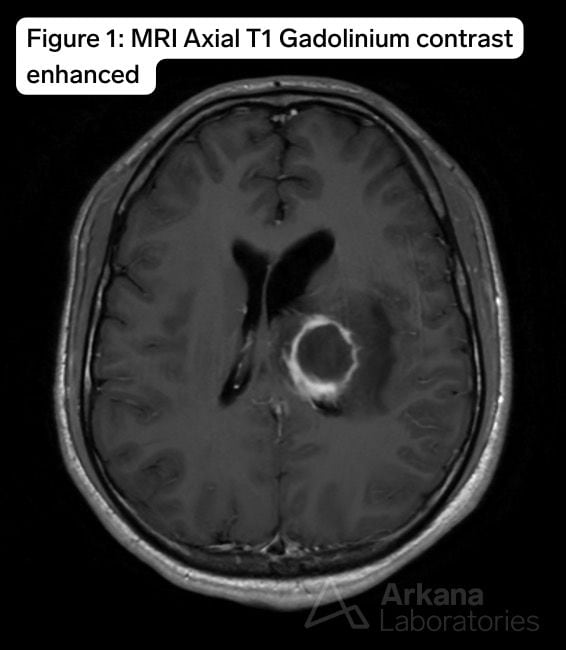
A male patient in his 20s presents with recurrent fevers for 2 months progressing to 10 days of rapid onset right sided weakness, headache, and malaise. An HIV test returned positive with CD4 counts in the 20s.
The life cycle of this organism includes which species as an intermediate host?
A. Cats
B. Snails
C. Birds
D. Crawfish

Answer:
C. Birds
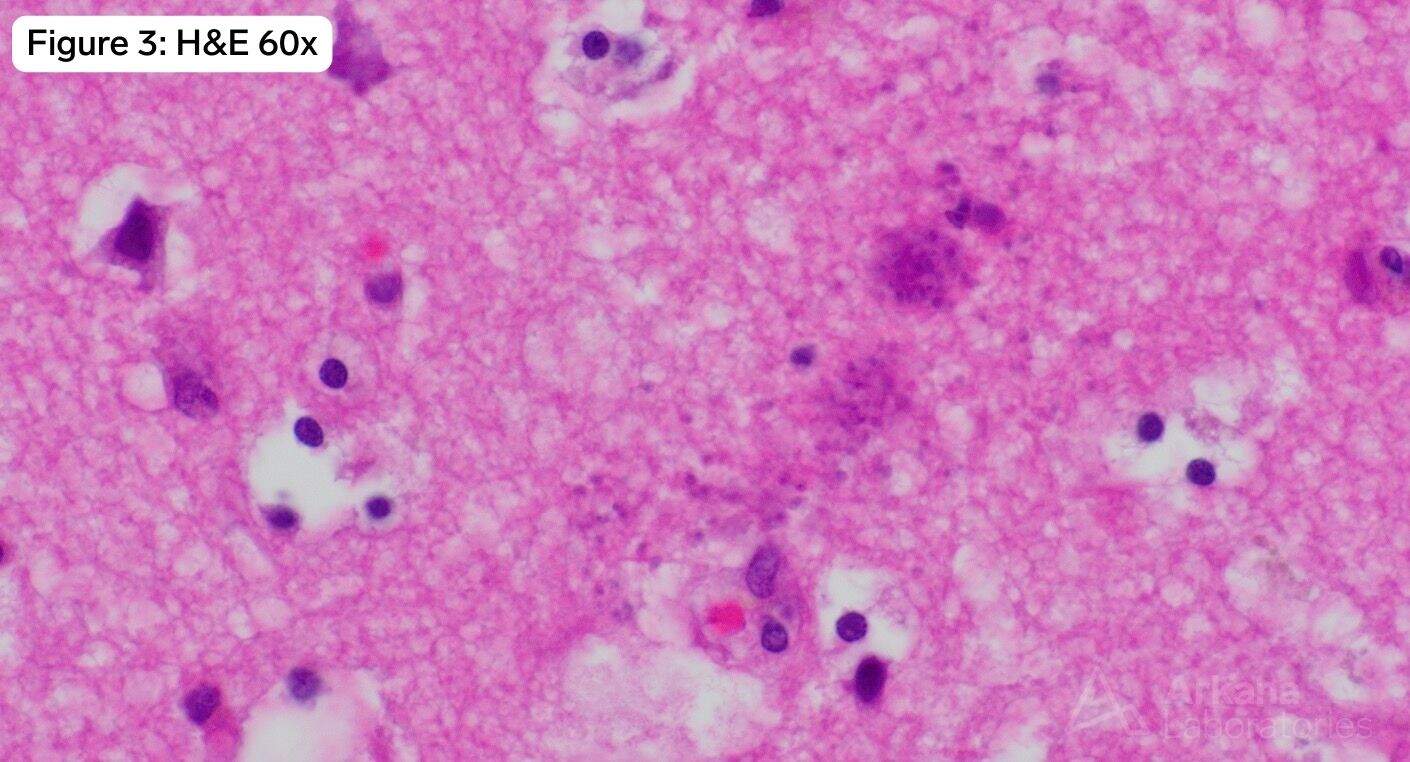
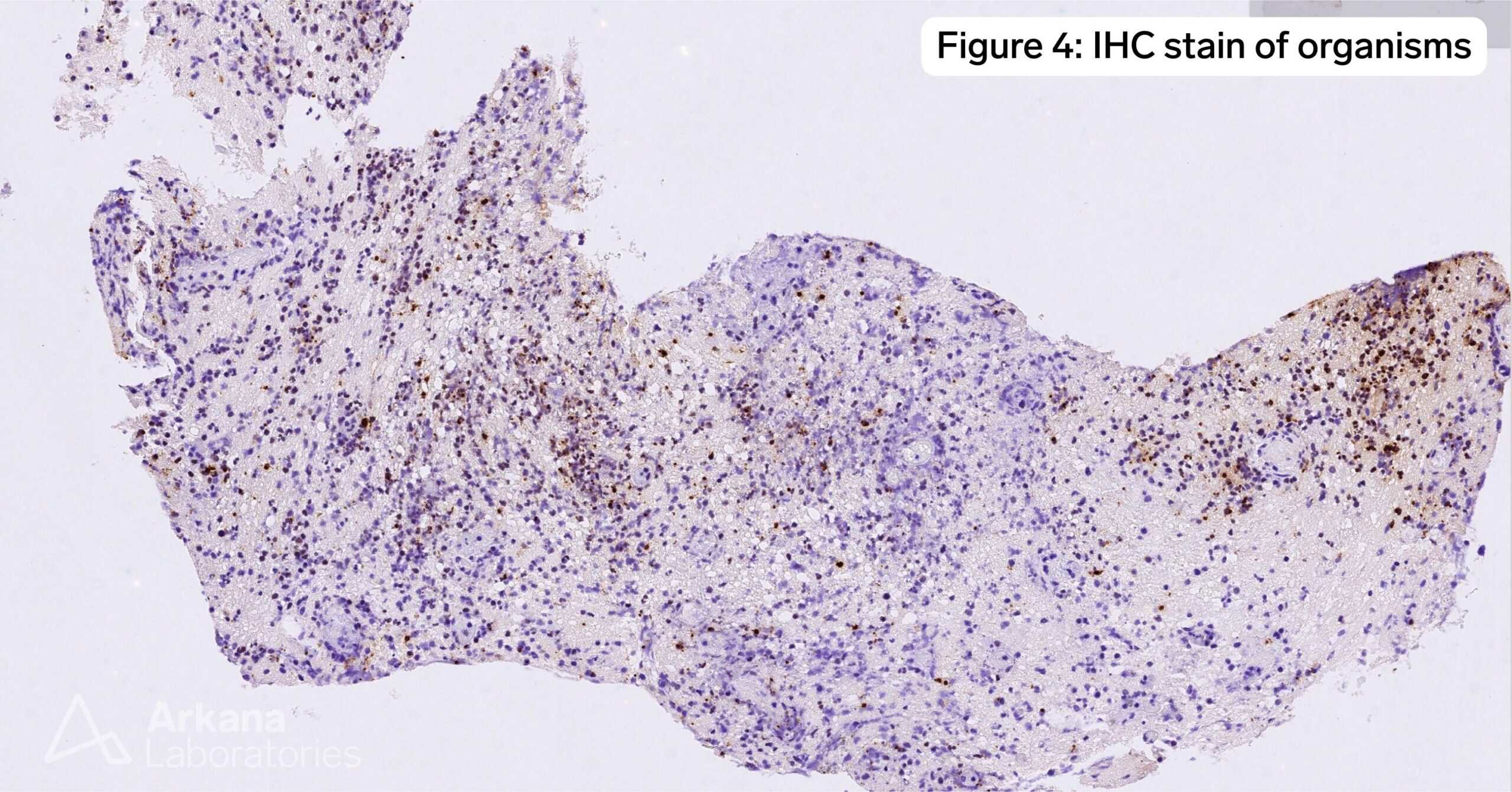
The organisms are Toxoplasma gondii with figure 1 demonstrating a classic ring enhancing lesion of this organism. Figure 2 demonstrates a few small tachyzoites interspersed within inflamed and reactive brain parenchyma. Figure 3 demonstrates a bradyzoite to the upper right with a ruptured bradyzoite releasing tachyzoites beneath it. Figure 4 is the incredibly helpful toxoplasma immunohistochemical stain. In this case the number of organisms identified by IHC was magnitudes of order higher than the amount identified on H&E staining.
Toxoplasma gondii is a protozoan parasite most commonly associated with its only known definitive host, cats. Intermediate hosts for T. gondii include most species of warm-blooded animals (humans, rodents, birds, etc). Sexual reproduction is only known to take place within the members of the family Felidae. The unsporulated oocysts are then released in the fecal material of a contaminated feline. Sporulation will occur in the environment, and the intermediate host becomes infected after eating soil, water, or plant material contaminated with oocysts. Oocysts transform after ingestion into tachyzoites (figure 2). The macrophages of the immune system engulf these invaders where they will encyst into bradyzoites (usually in the muscles, brain, or eyes) and remain dormant within the infected organism for the lifetime of that organism much like a sleeper agent in enemy territory waiting for their call sign to become activated. For smaller mammals that are preyed on by cats, the cat will ingest the infected meat, and the life cycle will continue. For humans, the cysts will remain for the lifetime of the patient. If the patient becomes significantly immunocompromised the bradyzoite will rupture releasing rapidly dividing tachyzoites (figure 3). In AIDS patients, toxoplasmic encephalitis is the most common cause of intracerebral mass lesions as the tachyzoites will multiply within glia and neurons causing direct cytopathic effect as well as induce significant inflammation causing vascular thrombosis and necrotizing abscesses.
Reference(s) / Additional Reading:
-
https://www.cdc.gov/dpdx/toxoplasmosis/index.html
Quick note: This post is to be used for informational purposes only and does not constitute medical or health advice. Each person should consult their own doctor with respect to matters referenced. Arkana Laboratories assumes no liability for actions taken in reliance upon the information contained herein.


