
Search & Filter All Posts
All Articles
(9 Results)KDIGO Connections: HCV-Associated Kidney Disease
How do you treat patients with hepatitis C-associated kidney disease?

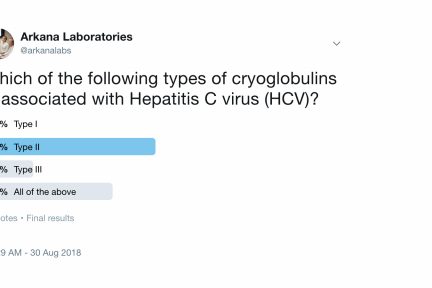
Twitter Post (August 30, 2018)
ANSWER: B Type II (mixed) cryoglobulinemia is characterized by immune-complexes containing a monoclonal Ig (usually IgM) that have an RF…

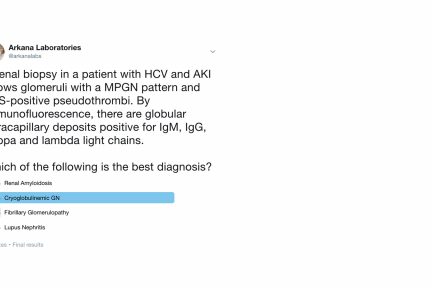
Twitter Poll (April 4, 2018)
ANSWER: B Mixed cryoglobulinemia is most commonly caused by hepatitis C virus (HCV), with some cases caused by lymphoproliferative or…

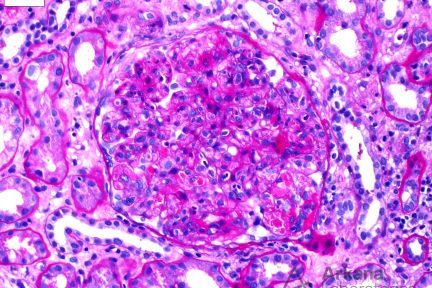
Hep C-Associated Cryoglobulinemic Glomerulonephritis
This biopsy was performed on a 66-year-old Caucasian male with a history of hepatitis C, who presented with nephrotic range…

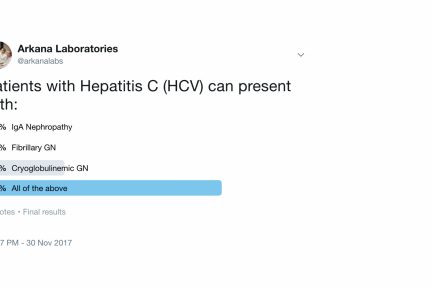
Twitter Poll (November 30, 2017)
ANSWER: D Patients with HCV can present with membranoproliferative GN, Cryoglobulinemic GN, membranous GN, fibrillary GN, immunotactoid glomerulopathy and IgA…
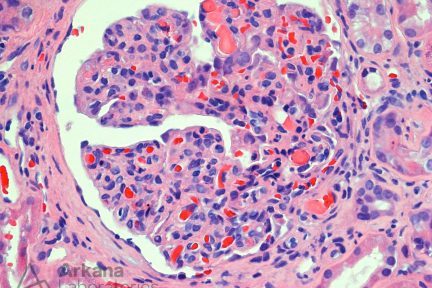

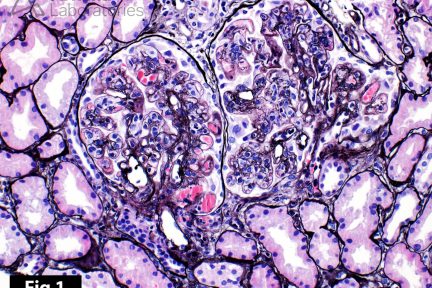
Cryoglobulinemic Deposits by EM
Electron microscopy can be helpful in the diagnosis of cryoglobulinemic glomerulonephritis. This renal biopsy (Fig. 1) shows a membranoproliferative pattern…
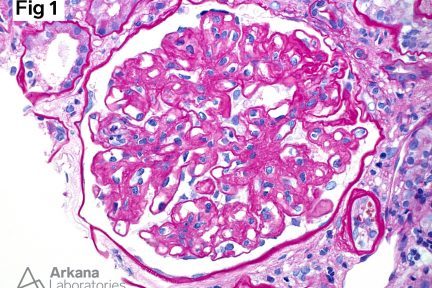
Fibrillary Glomerulopathy
Commonly heard after we give the diagnosis: I heard about this in Fellowship This 62-year-old African-American just completed treatment for…

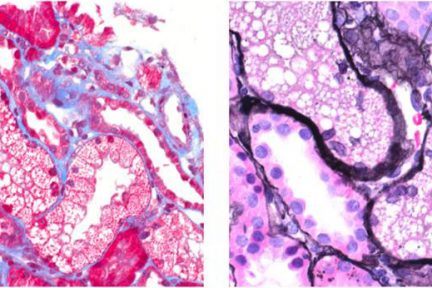
Pushing Glass (April 18, 2017)
A 45 year-old man received renal transplantation for HCV-associated end stage renal disease. He is currently treated with Sofobuvir, Tacrolimus…
